
The Quiet Strength of Terrazzo: Beauty, Sustainability, and Innovation in One Surface
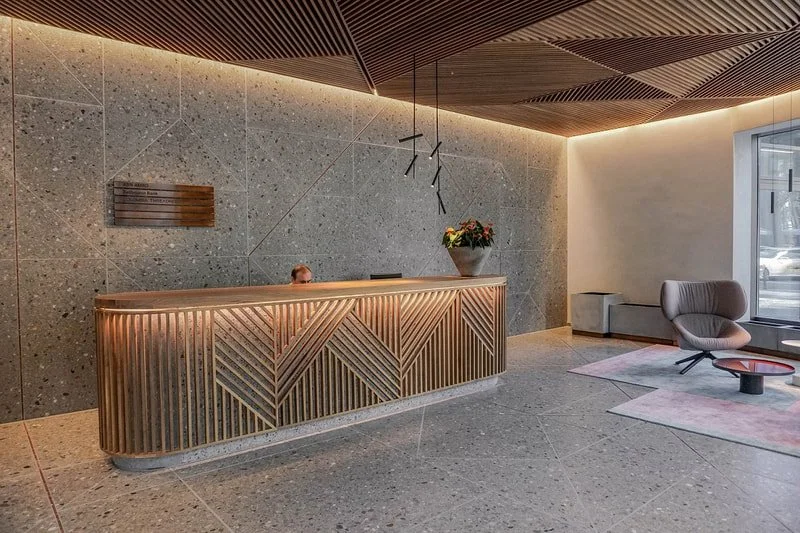


Terrazzo may be admired today for its visual richness and material charm, but its origins lie in something more humble — reuse. Developed in Italy centuries ago, terrazzo was created by artisans who repurposed marble chips and other stone offcuts from quarries. These fragments, once considered waste, were set into wet cement and ground smooth, revealing vibrant, organic patterns. This practice not only extended the life of valuable materials but also produced an extraordinarily durable and expressive surface.
At a time when sustainability is no longer optional but essential, terrazzo stands as a powerful reminder that design and environmental responsibility can coexist beautifully. Every piece tells a quiet story of resourcefulness: that nothing needs to be thrown away, and that beauty can come from rethinking what we consider waste.
Today, quarry operators often sell their marble waste to manufacturers like KeraVita, who then give it a second life. Large pieces are ground down through different stages using specialized grinders: coarse grinders for large fragments, finer ones for medium and small particles, and micro grinders for a powdery finish. These multiple grain sizes are carefully mixed to achieve the unique terrazzo look.
This process is beneficial on multiple levels: it reduces quarry waste, minimizes landfill impact, and creates a high-quality architectural material that is both sustainable and beautiful.
A Material That Lasts — and Surprises
Beyond its ecological value, terrazzo is renowned for its strength. It resists wear, staining, and weathering in ways that few other materials can match. This makes it a practical choice for high-traffic environments — from museums and schools to restaurants and kitchens. But it’s not just about performance. Terrazzo offers aesthetic unpredictability: every tile is slightly different, with its own blend of aggregate and form. These embedded fragments — ranging from marble to quartz, glass, or metal — dance across the surface like a frozen composition, creating subtle variation and rhythm.
No two tiles are alike, and that uniqueness becomes part of the architectural experience. Whether used as flooring, on countertops, or for cladding, terrazzo offers a layered texture and a sense of material history that’s both understated and rich.
From On-Site to On-Demand
Traditionally, terrazzo was installed in-situ. Craftspeople would pour the material directly onto the construction site floor, embedding stone chips by hand and grinding it down in place. While this process created seamless results, it also required time, expertise, and perfect timing. The surface was honed manually, and because everything was done in one continuous pour, there were no visible joints or lines.
However, the traditional method was also extremely complicated and expensive. Mixing and installing terrazzo on-site demanded highly skilled labor and often led to long project timelines.
Today, this artform has evolved. Companies like KeraVita have developed a more efficient and scalable method. Quarry leftovers are mixed with concrete and poured into large blocks, which are then pressed under high pressure for 48 hours. These solid blocks are then sliced, much like natural stone blocks, into terrazzo tiles of varying sizes and finishes.
This innovation allows for consistency, modularity, and easier installation without compromising on quality. Pre-finished terrazzo tiles maintain the material’s depth and sustainability while making it accessible for projects of any scale.
Perfectly Suited for Modern Spaces
Because of its combination of toughness and design flexibility, terrazzo is especially suited to public and semi-public spaces. It’s equally at home on a museum floor as it is on a bar front or reception desk. Its resistance to staining and impact make it perfect for surfaces that get used daily — think kitchen countertops, backsplashes, tabletops, or even entire wall claddings.
The choice of aggregates, pigments, and polish levels opens up endless creative directions. Terrazzo can be neutral and subtle, or bold and expressive. This gives designers and architects the opportunity to create visual interest without sacrificing practicality.
Why We Value Terrazzo by KeraVita at hochwert
At hochwert, we’re drawn to materials with depth — not just in texture or pattern, but in narrative. Terrazzo is one of those rare surfaces that combines material intelligence, craft tradition, and visual poetry. It carries a legacy of re-use and still pushes forward in its possibilities.
Our collaboration with KeraVita reflects this shared mindset. Their terrazzo collections bring a contemporary clarity to a historical material. They’ve taken something that once required labor-intensive installation and made it elegantly modular, without losing any of its authenticity.
We believe in materials that tell stories — not just stories of origin, but of transformation and future potential. That’s why we’re proud to feature terrazzo in our showroom and project portfolio.
Come see it for yourself: the quiet strength of terrazzo, its sustainable heart, and its endless possibilities — all waiting to be explored at hochwert in Zurich.